Megatrend: Urbanisation
Auf dieser Seite finden Sie:
According to the IDOS German Institute of Development and Sustainability, in 2026, cities accounted for just 2% of the Earth’s surface. Per IDOS, these cities are already home to over 50% of the world’s population. Various forecasts suggest that by 2050, 70% of the world’s population will live in cities.
Growth calls for smart, digital infrastructure
The key questions that arise are: How can urban infrastructure be designed to conserve resources? How can infrastructure support water supply and wastewater disposal as populations grow?
One approach involves what are known as smart city concepts and smart urban areas. By utilising interconnected digital infrastructures in specific applications, they can help support growing urbanisation while taking energy efficiency, resources and social aspects into consideration.

What does urbanisation mean?
In an evolving, interconnected world, major cities are key economic hubs and shape our modern lives. Cities are not only economic centres, but also political and cultural meeting points.
This is what makes cities so appealing. The growing urban population needs more housing, transport and infrastructure, but environmental action and sustainability are also becoming increasingly important. Cities must therefore adapt their infrastructure to meet changing requirements – namely, on a social and functional level.
How does urbanisation come about?
The rising population density in cities can be attributed to a variety of factors. One of the main reasons for cities’ appeal is their economic importance. They offer more jobs, and there is also the prospect of higher pay, as well as better educational and career opportunities. In particular people from rural areas migrate to cities in the hope of a better life.
One example of this enormous population growth is the Chinese metropolis of Shanghai, home to the world’s largest container port. With around 25 million inhabitants, it is one of the world’s largest metropolitan regions and one of its fastest-growing cities.
Forecasts published by the Institute for Economics & Peace (IEP) in 2023 suggest that some African cities in particular will see especially strong population growth by 2050. Cities such as Luanda, Nairobi, Dar es Salaam and Khartoum are set to grow significantly by then, with some cities expanding even over 100%.
The challenges of urbanisation
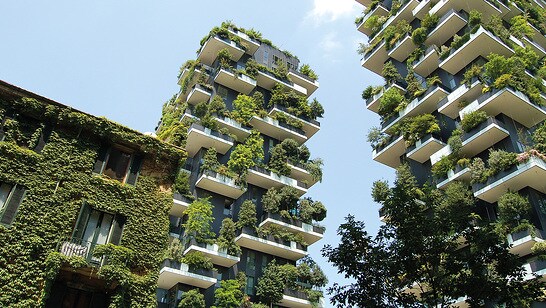
Cities take up large amounts of land and resources: around 70% of emissions that harm the climate are caused by cities. In certain rapidly growing cities, inadequate infrastructure can increase the risk of resource shortages and, furthermore, exacerbate social tensions, increase environmental pressure and encourage the spread of informal settlements in contexts where housing is scarce. According to the United Nations Human Settlements Programme (UN-HABITAT), the proportion of people living in slums in 2023 was particularly high in cities in sub-Saharan Africa (50.2%) and Central Asia and South Asia (48.2%). That same year, around 24% of the urban population worldwide lived in slums.
Alongside social and economic challenges, many cities are also grappling with the various consequences of climate change, which can manifest as water scarcity or energy-related problems. According to data from the World Resources Institute for 2023, one in four of the 500 largest cities regularly experiences water supply shortages.
Solutions for urbanisation
Smart cities and smart urban areas
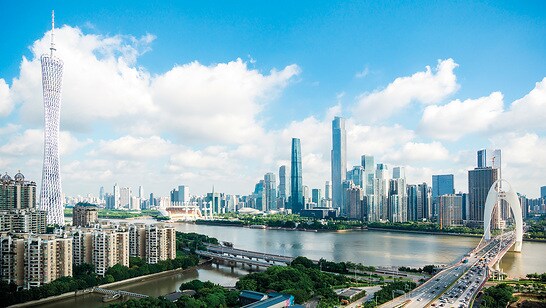
Smart city concepts and smart urban areas are among the most promising approaches. As opposed to ordinary major cities, such interconnected systems can pool resources in specifically defined applications, thereby conserving them. This also applies to the use of networked, energy-efficient pumps, which can support the demand-based control of drinking water supply and dewatering in specific scenarios. Modernisation, retrofitting or replacement may need to be examined in cases where the current pump systems in cities no longer meet the latest market-specific requirements for energy efficiency and digitalisation. Wilo can draw on its experience in the development and manufacturing of pumps and pump systems to provide solutions tailored to the specific requirements of each project.
Urbanisation needs ongoing innovation
In the long term, smart city concepts can help to tackle a number of challenges of urbanisation. However, these concepts can only be implemented through continuous adjustments and innovations.
Wilo offers state-of-the-art solutions for water supply and wastewater disposal in towns and cities. In addition, Wilo invests in research and development for new products and technologies, such as new materials, digital functions and innovative approaches to digital and AI applications in water management. In this way, new technical and organisational approaches can help cities respond to specific challenges posed by urbanisation.
In smart cities and urban areas, cooperation between public authorities, businesses and citizens is crucial. Collaboration based on pooled expert knowledge can support the development of approaches to tackling specific environmental problems, as well as certain economic and social challenges.
References
Xiong'an, China
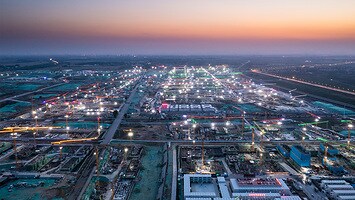
The city of Xiong'an, situated some 180 kilometres from Beijing, is set to become a metropolis home to around 2.5 million people. The aim is to construct a future city that implements the highest sustainability standards. According to the project plans, Xiong’an is intended to relieve the burden on certain operations in Beijing. But its main purpose is to relieve the pressure on densely-populated Beijing. It will be connected with the Chinese capital via a high-speed train line.
Kairo, Ägypten
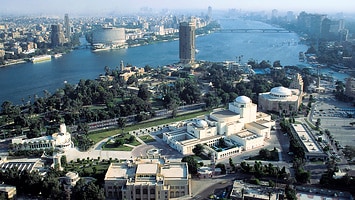
The ‘New Cairo Administrative Capital City’ is located just 60 kilometres from Cairo, in the middle of the desert. It is Egypt’s new administrative capital. After just seven years of construction, it was officially opened in January 2023. The city is designed to accommodate up to six million residents and, according to the project plans, should relieve pressure on certain aspects of Cairo’s infrastructure.


