Megatrend: Water responsibility
Auf dieser Seite finden Sie:
By 2050, five billion people worldwide are expected to be at risk of water scarcity
Water is a scarce resource in many regions of the world. This applies not only to some countries in Asia and Africa, but increasingly also to parts of Europe and the United States.
According to estimates by the World Health Organisation (WHO) and the United Nations Children’s Fund (UNICEF), around 785 million people are currently affected by acute water scarcity – and the figure is rising. They lack access to basic drinking water supply and sanitation facilities. Water supply and wastewater disposal are real problems, especially in many rapidly growing megacities of emerging countries.

Water – a precious resource
Access to water is a key factor in socio-economic development: every human being and every economy needs water to survive. If access to water – which is scarce anyway – is restricted, there are serious consequences. Water scarcity, caused by over-use or pollution, can hamper economic development and be a risk factor for social tensions.
Why is water scarce?
Earth is covered in 71% water. 97 % of this is in the form of salt water in the oceans and marginal seas of the earth and can only be used by humans to a limited extent. This leaves just under 3% of fresh water, for example in lakes and rivers, and only some of this is directly usable. After all, a large part is trapped in glaciers and as permanent snow and ice cover. In short, the planet’s usable freshwater resources are extremely limited and availability varies by region.
Climate change can exacerbate water stress in particularly vulnerable regions: global warming increases the likelihood and intensity of certain heatwaves and droughts. Regions that are already affected by water stress are especially at risk. There, the reliability of water supply comes under further pressure. Industrialised countries can also be affected.
Water scarcity is on the rise across the planet
According to the United Nations, as many as 2.2 billion people worldwide already do not have regular access to clean water today. In addition, 4.2 billion people, i.e. more than 55 % of the global population, only have inadequate sanitary facilities. This increases the risk of certain water- and hygiene-related diseases.
That is why safe drinking water is a cornerstone of the prevention of water-related diseases and is a key prerequisite for health and economic development. Not least because of this, clean water and sanitation are an essential component of the United Nations’ Sustainable Development Goals.
While the list of countries suffering from water shortage is getting longer and longer, water consumption is on the rise. Factors influencing this include industrialisation and population growth. According to a United Nations forecast, more than five billion could be at risk of water scarcity by 2050.
Where little or no water is available, agricultural production — and therefore food security — can be severely affected. According to the United Nations, around 828 million people were affected by hunger worldwide in 2021, especially people living in dry regions.
This is because the size of the challenges faced by farmers there is particularly significant: they have to grow food with little water and on poor soil. Water scarcity can also limit the amount of land available for commercial cultivation in the regions affected. Not to mention that with certain irrigation systems, significant distribution or evaporation losses occur. This can lead to increased water extractions or losses for the plants.
What can be done to tackle water scarcity?
Water is a human right and access to safe drinking water should not be a privilege. That is why Wilo develops pumps and system solutions for applications in water supply. These technologies are used worldwide in applications relating to the supply, treatment and transportation of water. Our solutions therefore address specific technical challenges in water management applications.
Applications for water supply and treatment
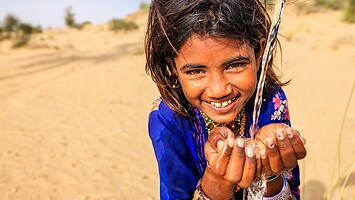
Water management may include measures to reduce certain types of water loss and to promote water re-use as well as forming part of adaptation measures to address water-related climate risks. We believe that everyone can do their part — whether on an individual, state or organisational level. Technical solutions for supply, treatment, transportation and irrigation are used to tackle water scarcity.


