Europe’s promise of prosperity is faltering!
On this page:
France and Germany between economic upheaval, political alienation and industrial renewal. Now more than ever, it is up to the younger and middle generations to shape a new European era. An essay.
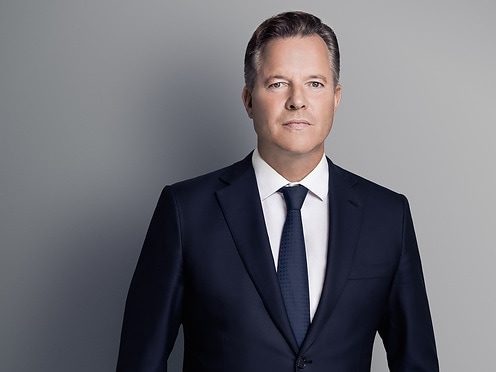
Oliver Hermes studied in France and has led a global corporation with strong French and German value chains for two decades. In recognition of his commitment, he was awarded the French Ordre national du Mérite by French President Emmanuel Macron. His perspective combines many years of international industrial and leadership experience with a deep familiarity with both countries. The author expresses his personal views.

“France and Germany are facing a profound economic, political and societal transformation.”
France and Germany are facing a profound economic, political and societal transformation. While France is grappling with high public debt, political fragmentation and social conflicts over distribution, Germany is confronting a structural challenge to its successful industrial model.
Both countries are united by a more fundamental development: established political parties are losing their ability to retain voters, while sections of the younger and middle generations in particular are increasingly questioning their economic prospects. Europe needs a new economic and societal promise for the future that combines prosperity, technological competitiveness and individual opportunities for upward mobility.
1. France: a social model under pressure
France’s political self-image has traditionally been based on a strong state, comprehensive social protection and the conviction that political leadership can shape societal progress. This model is coming under increasing pressure.
Emmanuel Macron took office in 2017 with the ambition of overcoming the divide between left and right, modernising the French economy and strengthening Europe politically. Today, however, the political landscape is highly fragmented. The traditional Socialists and the mainstream centre-right have lost considerable ground. Three camps now shape the political contest: the nationalist right around the Rassemblement National, the political centre and a heterogeneous left-wing spectrum.
With public debt at around 116 percent of gross domestic product at the end of 2025, France needs to stabilise its public finances while demands on defence, education, infrastructure and social security continue to grow. The conflicts over pension reforms and public benefits highlight the tension between societal expectations and fiscal sustainability.
France therefore faces a dual challenge: it must stabilise its public finances while at the same time strengthening confidence in the capacity of its political institutions to deliver reform.
2. Germany: The industrial success model at a turning point
For decades, Germany’s economic model was based on internationally competitive industry, a strong export economy, specialised medium-sized companies, relatively affordable energy and open global markets. Several of these conditions have fundamentally changed.
China has long since ceased to be merely a sales market and has become a highly capable technological competitor. The United States is pursuing a trade and industrial policy increasingly driven by national interests. Digitalisation, artificial intelligence and decarbonisation are transforming value chains. At the same time, Germany faces high business costs, bureaucracy, slow permitting processes, skilled labour shortages, and shortcomings in infrastructure and digitalisation.
Germany continues to have a broad industrial base, successful family-owned companies and deep engineering expertise. The decisive question is whether it can combine these strengths with new technologies to generate additional productivity and value creation.
While France needs to secure the financial sustainability of its state-centred model, Germany faces the task of renewing the future viability of its industrial model.
3. The erosion of trust in the political centre and the alienation of the younger generation
In both countries, established parties are losing their ability to retain voters. In Germany, the AfD and Die Linke in particular are mobilising sections of the electorate that are turning away from the traditional governing parties. In France, the left-wing camp around Jean-Luc Mélenchon and the nationalist right around Marine Le Pen are attracting support.
In Germany’s 2025 federal election, Die Linke was the strongest party among 18- to 24-year-olds, with around 27 percent of the vote. The AfD received around 21 percent among 25- to 34-year-olds and around 27 percent among 35- to 44-year-olds, coming first in both age groups. Nationwide polls from 2026 also point to changing political dynamics, although they represent only snapshots in time.
This development does not amount to a uniform shift to either the right or the left. The AfD and Die Linke differ fundamentally in their political positions and in their classification by Germany’s domestic intelligence authorities. What their results have in common is that they demonstrate changing political loyalties towards the traditional governing centre.
Many people between the ages of 18 and 45 face high housing costs, greater barriers to home ownership, uncertain pension prospects and rising long-term financial burdens. This can create the impression that established parties are more concerned with protecting existing entitlements than with enabling future opportunities for upward mobility.
In the 2025 federal election, around 43 percent of eligible voters were at least 60 years old, while those under 30 accounted for only around 13 percent. This demographic asymmetry does not necessarily imply a conflict of interests, but it does make the political balancing of interests between generations more challenging.
The central challenge is that sections of the younger and middle generations no longer take it for granted that hard work and participation in society will enable them to achieve a higher standard of living.
4. When political polarisation becomes an economic risk
Companies need reliable framework conditions for long-term investment. Political fragmentation can make planning more difficult when stable majorities are lacking or when key issues relating to tax, energy, labour market and trade policy become increasingly contested.
In France, this primarily concerns fiscal and social policy; in Germany, industrial competitiveness and investment conditions. Political pluralism is not in itself an economic disadvantage. The decisive factor is whether democratic institutions can reconcile different interests and translate them into sustainable decisions.
5. Europe amid shifting geopolitical dynamics
France and Germany are key economic and political actors in the European Union. France contributes its foreign and security policy capabilities, nuclear deterrent and vision of strategic autonomy. Germany brings a broad industrial base and strong international value chains.
Both countries must respond to growing geopolitical competition, US industrial policy, China’s technological strength, and the need for European defence capabilities, energy security and resilient supply chains.
France’s tradition of strategic industrial policy and Germany’s industrial market economy can complement one another. European cooperation should increasingly be understood as a joint project for growth and innovation.
6. France’s opportunity for renewal: Technological sovereignty as a driver of growth
Despite its fiscal difficulties, France has significant capabilities in nuclear energy, aerospace, defence, research and artificial intelligence. Combining technological sovereignty with industrial innovation offers an opportunity to complement its state-centred social model with greater entrepreneurial growth momentum.
Government industrial policy can coordinate strategic initiatives. The decisive factor, however, is to link public investment more closely with private capital, innovative companies and international competitiveness. AI, energy technologies, defence and digital infrastructure in particular offer potential for new value creation.
France’s comparatively low-carbon nuclear power generation could become a competitive advantage as the energy demand of data centres and AI infrastructure increases, provided that security of supply, costs and infrastructure are aligned.
For young people, this must translate into tangible prospects for skilled employment, entrepreneurship and upward social mobility. France’s opportunity lies in combining the strength of a strategically active state with a more dynamic and innovation-oriented private sector.

7. Germany’s opportunity for renewal: Industrial AI as a new driver of growth
Industrial AI offers Germany the prospect of a new model for industrial growth. The combination of a broad industrial base, engineering expertise, successful family-owned companies and deep understanding of physical processes represents a strategic advantage.
This domain knowledge cannot simply be replaced by digital platforms or large language models. Germany does not need to copy Silicon Valley. Its opportunity lies in combining its industrial expertise with artificial intelligence and using this combination to create world-leading solutions.
The strategy comprises three interconnected dimensions: Embed AI, Enable AI and Embrace AI.
Embed AI – Developing the world’s most intelligent industrial products
Artificial intelligence is integrated directly into industrial products, machines, plants and technical systems. This enables products to optimise their operation, identify deviations at an early stage and adapt to changing conditions.
Combining engineering expertise, industrial data and an understanding of physical processes enables new generations of products with greater efficiency, additional functionality and digital services. Embed AI brings German engineering expertise into the age of intelligent industrial systems.
Enable AI – Enabling the physical infrastructure of the global AI revolution
Artificial intelligence is not purely a digital technology. Data centres require energy, cooling, water, pumps, fans, automation and intelligent building technology. The semiconductor industry requires high-precision manufacturing equipment, cleanroom technology and complex utility systems.
German industrial companies have considerable expertise in precisely these areas. With its technologies, Germany can not only benefit from the global AI revolution, but also help make it possible in the first place.
The expansion of data centres, semiconductor fabs and digital infrastructure is opening up new growth markets. Enable AI means providing the physical foundation of the AI economy and turning this into export opportunities, investment and value creation.
Embrace AI – Increasing productivity and renewing the world of work for the younger generation
Embrace AI refers to the systematic use of artificial intelligence within companies. It is about far more than automation and cost reduction: AI offers an opportunity to renew the industrial workplace, corporate culture and the economic prospects of younger generations.
Industry must increase productivity in the face of high costs, skilled labour shortages and international competition. At the same time, expectations regarding leadership, personal development, autonomy, flexible working models, meaningful work and work-life balance are changing.
AI can reduce repetitive and administrative tasks, create more space for creative and analytical work, support decision-making and make knowledge more accessible. These benefits do not arise automatically: companies need to upskill employees, manage change transparently and enable active participation.
Traditional leadership models should continue to evolve. Leaders can focus more strongly on empowering people, delegating responsibility and encouraging individual initiative. Particularly valuable is the combination of the industrial experience of older employees with the digital skills and new perspectives of younger colleagues.
Productivity gains need to translate more clearly into personal progress again. Higher productivity should not result solely in lower costs, but also in better skills, attractive working conditions, new income prospects and opportunities for professional advancement.
Young people should not merely be users of new technologies, but active architects of industrial transformation. A culture that encourages experimentation, entrepreneurial thinking and individual responsibility can combine innovative strength with personal fulfilment.
The industrial AI revolution is not solely about making machines smarter and processes more efficient. It is also about empowering people to work more productively, creatively, autonomously and entrepreneurially.
Three dimensions – one new industrial business model
Embed AI creates smarter industrial products and technological differentiation. Enable AI opens up global markets for physical AI infrastructure. Embrace AI strengthens productivity while linking technological progress with more attractive prospects for work and professional development.
Family-owned companies in particular, with their long-term ownership structures and deep industrial application expertise, can develop new business models. Hidden champions can become Industrial AI champions.
To achieve this, Germany needs competitive energy prices, faster permitting processes, innovation-friendly regulation, digital infrastructure, growth capital, and modern education and professional development. Industrial AI can become the core of a new growth model that combines competitiveness, technological sovereignty and societal prosperity.
8. Europe’s test: A new promise to the next generation
Europe’s post-war model was built on the promise that each generation could improve its standard of living and achieve upward social mobility. Today, that promise of progress appears less certain. High housing costs, economic uncertainty and the cost of financing an ageing society are intensifying distributional conflicts.
France must combine the modernisation of the state, fiscal sustainability and industrial innovation. Germany must translate technological innovation more effectively into productivity growth, value creation and individual opportunities for upward mobility.
France’s capabilities in strategic technologies and Germany’s broad industrial base complement one another. Joint European value chains in AI, energy, automation and critical infrastructure could strengthen Europe’s economic and technological capacity to act.
The decisive factor is that progress produces tangible benefits for society: through attractive employment, rising incomes, high-quality education, new businesses and genuine participation. Political polarisation has many causes and cannot be explained by economic factors alone. A credible vision for the future can, however, help strengthen trust in democratic institutions.
Europe’s real crisis is not only a crisis of public finances, industrial competitiveness or the political centre. It is also a crisis of confidence in the future.
A new European renewal will ultimately be measured by whether the younger and middle generations in particular once again have a credible prospect of prosperity, self-determination and societal progress.