Win China, defend Europe
On this page:
Why Europe’s industrial future stands to benefit from a strong partnership with China.
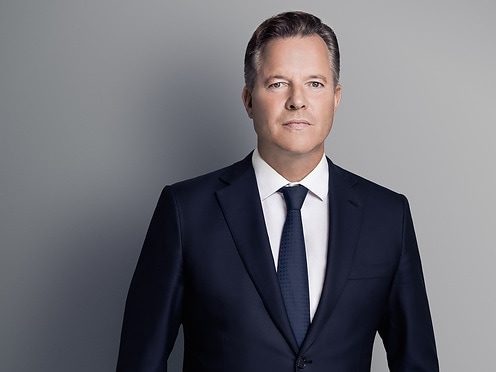
Oliver Hermes is President & Global CEO of the Wilo Group, Chairman of the Board of Trustees of the Wilo-Foundation, Honorary Consul of the Republic of Kazakhstan in North Rhine-Westphalia, Member of the Board of Trustees of the Foundation for Family Businesses, Member of the Board of Trustees of the Africa Association of German Business, Deputy Chairman of the Near and Middle East Association (NUMOV), Member of the Executive Board of the Sub-Saharan Africa Initiative of German Business (SAFRI), Representative of the Wilo Group on the Germany-UAE Business Council, and Member of the CNBC CEO Council. Hermes studied economics, specialising in East Asia and China, and speaks German, English, French and Chinese. He is an essayist with articles published in independent media. The author is expressing his personal views.

Europe is engaged in an intense debate about its industrial competitiveness – about high energy costs, increasing regulation, geopolitical shift and growing international competitive pressure.
Yet one crucial insight is often overlooked: for decades, Europe’s industrial strength has also rested on an openness to the world, global partnerships and the ability to grow alongside other economies. Hardly any other economic relationship illustrates this more strikingly than that between Europe and China.
Over the decades, European and Chinese companies have built up excellent relations. Together, they have invested, manufactured, carried out research and tapped into new markets. Trade relations have given rise to long-term industrial partnerships, shaped by mutual trust, economic success and an intensive exchange of knowledge.
China is far more than just a market for European industry. It is a partner, a hub for innovation and an integral part of our global future.
My conviction is clear: Any European industrial company that aspires to become a global industrial AI champion must hold its own in the Chinese market and capitalise on the potential for innovation emerging there. Not because China should be seen as an adversary. Rather, it is because a strong presence in China, collaboration with Chinese partners and competition with outstanding Chinese companies strengthen our own performance in the long term.
‘Win China, defend Europe’ – this phrase does not describe a confrontation between two economic blocs. It embodies the belief that successful positioning in China can make a significant contribution to securing Europe’s industrial competitiveness in the long term.
Competitiveness is no longer determined by cost alone
For decades, industrial competitiveness was above all associated with productivity, economies of scale, quality and cost leadership. These factors remain important. However, in the age of AI, a new dimension of global competition is emerging: the speed at which companies translate technological opportunities into market-ready products, intelligent systems, new business models and more efficient processes.
It is no longer the costs alone that determine competitiveness. The speed of transformation is becoming an increasingly decisive factor.
China is a striking example of the dynamics that ensue when technological progress, industrial expertise and a strong commitment to innovation come together. New AI applications are being developed, tested and integrated into industrial processes with remarkable determination.
At the same time, Europe possesses outstanding industrial expertise, excellent engineering skills and in-depth technological know-how. If we can successfully combine these strengths with the pace of innovation in the Chinese market, enormous potential will be created for both sides.
This is not about pitting European and Chinese industrial companies against one another. It is about learning from each other, tapping into technological opportunities together and succeeding in the face of global competition.
The three Es of industrial AI transformation
The dynamics of Chinese industry can be understood in terms of three strategic areas of action: Embed AI, Enable AI and Embrace AI. They simultaneously provide a framework to guide European industrial companies on their journey to becoming global industrial AI champions.
Embed AI: Integrating AI into industrial value creation
In China, one can see just how consistently artificial intelligence is being embedded. Machines become more intelligent. Systems can predict operating conditions. Industrial installations optimise their energy consumption, detect anomalies and dynamically adapt their performance to changing requirements.
The real competitive advantage does not stem from isolated AI algorithms, but from combining industrial domain knowledge, physical systems, data and artificial intelligence. This presents excellent opportunities for deeper cooperation between Europe and China.
European companies bring decades of experience in the development of complex industrial technologies to the table. Chinese companies often have remarkable capabilities when it comes to rapidly industrialising and scaling digital applications. When European engineering expertise meets the pace of Chinese innovation, solutions can emerge that set new global standards.
Enable AI: Building the industrial infrastructure for AI
China is driving the development of AI value chains forward at an impressive pace. This ranges from extracting and processing strategic raw materials, including rare earths, through to expanding modern semiconductor production capacity and developing AI industrial parks, data centres and digital infrastructure. This gives rise to industrial ecosystems. The size and pace of these developments are worthy of admiration.
Artificial intelligence requires a high-performance physical infrastructure. Without energy, water, cooling, semiconductors, networks and industrial systems, the AI economy cannot flourish.
It is precisely here that there are significant opportunities for European industry, whose traditional core competencies are vital when it comes to building this infrastructure. Long-standing customer and supplier relationships can pave the way for new partnerships aimed at jointly shaping the industrial infrastructure of the AI economy.
Embrace AI: AI as a business mindset
The third dimension may well be the decisive one. Artificial intelligence must not remain an isolated technology project. It must become an integral part of corporate governance and all relevant business processes – from research and development, through procurement, production and logistics, to sales, service and administrative functions.
In many Chinese companies, the openness towards new technologies is impressive. Innovations are tested quickly, existing processes are scrutinised and successful applications are consistently scaled up. Behind this lies an entrepreneurial mindset that views technological change, above all, as an opportunity.
European companies have a lot to learn from this mindset. After all, the greatest challenge to AI transformation often lies not in the technology itself but in changing established ways of thinking. Anyone who views artificial intelligence merely as a tool for improving efficiency is underestimating its potential. Those who recognise it as a driver of business transformation can redesign entire value creation models.

A decades-long industrial success story deserves a future
Europe’s economic relationship with China is one of the most important industrial success stories of recent decades. European companies have made a significant contribution to China’s industrial development through their technologies, machinery and plants. At the same time, China has opened up enormous growth opportunities for European companies.
Business relationships have given rise to long-term corporate networks, personal friendships and mutual trust. This human dimension is often underestimated. Successful international partnerships are not built solely on contracts and investment, but on people who work together to achieve common goals across cultural and geographical boundaries.
China has long ceased to merely be a market for European machinery and plants. Chinese companies have themselves become technological leaders in numerous sectors. That should not come as a surprise to us.
Did we really believe that China would spend decades acquiring European machinery, plants and production technologies without harnessing them, developing them further and building up its own industrial capabilities?
China’s technological rise is also a reflection of the success of decades of economic cooperation. Customers have become partners. In many sectors, partners have also become formidable competitors. Partnership and competition are not mutually exclusive. It is precisely between strong partners that challenging competition can foster innovation and mutual progress. We should not call these long-standing relationships into question. We should take them to a new technological and industrial level instead.
China as the training ground for European industry
We should not view China primarily through the lens of geopolitical rivalry, but rather as one of the most exciting hubs of innovation and, at the same time, as a most demanding training ground in global industry. Training is not valuable because it is easy, but because it makes you stronger.
In China, European companies face highly innovative competitors, discerning customers, short innovation cycles and an impressive willingness to rapidly transform new technologies into commercially viable solutions. This environment challenges companies to develop more quickly, innovate more consistently and work closely with their customers.[AH1]
China is not only a place of competition, but also of learning, exchange and collaboration. Those who succeed in China gain not only market share but also experience, innovative strength and skills that contribute to their global competitiveness over the long term.
This is where the strategic link between ‘win China’ and ‘defend Europe’ lies.
A European company that gains market share in the dynamic Chinese market develops capabilities that will also help it to defend its position in the long term in the more saturated European markets. China is thus becoming a key centre for training and innovation for global industry.
Moving beyond an export-led mindest
The days when international competitiveness could be assessed primarily on the basis of bilateral trade volumes or national export statistics are long gone. Globally diversified industrial companies no longer focus exclusively on export markets. They think in terms of regional customer needs, value creation structures and innovation ecosystems.
A European company that develops, manufactures and sells products in China for Chinese customers is no less successful on the international stage than one that exports its products from Europe to China. Such a regional presence is often a prerequisite for successfully serving customers over the long term and building partnerships.
‘Local-for-Local’ does not mean giving up on globalisation. It is its contemporary evolution.
Modern globalisation does not mean concentrating value creation in a single location and supplying the world from there. It involves incorporating regional expertise in a globally integrated business model. Anyone wishing to serve the Chinese market successfully must have a local presence, develop local expertise and make a long-term commitment.
Research and development must be organised globally
If companies regionalise their value creation, they must also build up their capacity for innovation at a regional level. Research and development capabilities need to be built where demanding customers, dynamic markets, technological ecosystems and skilled talent come together. China plays a prominent role in this regard.
The pace of technological development, proximity to sophisticated industrial applications, and the availability of outstanding engineers and scientists make the country a major centre of innovation. European companies should not use this potential solely to adapt existing products but also develop their own innovation capabilities there.
Regional research and development centres must cooperate closely while also engaging in constructive global competition for the best ideas, the fastest development cycles and the most compelling customer solutions.
An innovation from China should be just as readily deployed in Europe as a European innovation is in Asia or America. What matters is not their geographical origin, but their contribution to global competitiveness.
Different perspectives and areas of expertise thus complement one another to form a global innovation network. Clear rules on intellectual property, data security and technological governance are not at odds with cooperation, but rather a prerequisite for reliable, long-term partnerships.
“Economic sovereignty does not mean foregoing international partnerships, but rather working together successfully from a position of strength.”
Europe’s strength stems from openness and cooperation
Over the decades, Europe has not built its industrial strength through isolation but through innovation, international cooperation, open trade and successful integration into global value chains.
Of course, international economic relations require reliable rules, a level playing field and mutual respect. Differing economic interests and political perspectives will continue to exist. However, they should not lead to industrial partnerships that have developed over decades being collectively called into question.
Europe should not view China primarily as an adversary, but as an important partner with whom it shares a long and successful economic relationship and great opportunities for the future.
Industrial transformation, artificial intelligence, decarbonisation and the sustainable expansion of critical infrastructure require enormous technological and economic efforts. Europe and China’s strengths complement each other. Through constructive cooperation, they can make a significant contribution to tackling these challenges.
A confident European industry does not need to distance itself from China in order to preserve its identity. Economic sovereignty does not mean foregoing international partnerships, but rather working together successfully from a position of strength.
Win China, defend Europe
Artificial intelligence accelerates innovation cycles, transforms technological value chains and opens up new opportunities for industrial collaboration. China is a key driver of innovation in this transformation.
For European industrial companies, this presents a historic opportunity: they can combine their strengths with the pace and innovative drive of the Chinese market. To achieve this, they must consistently integrate artificial intelligence into products and processes, strengthen regional value creation, and ensure that innovations can be deployed globally, regardless of their geographical origin.
‘Win China, defend Europe’ does not mean pitting Europe and China against each other. It means viewing our decades-long successful partnership as a strategic opportunity for our shared industrial future.
Anyone who invests in China, conducts research there and drives innovation forward in collaboration with Chinese partners strengthens their global competitiveness. Any company that gains market share in the demanding Chinese market also lays the foundations for defending its position in Europe in the long term. Partnership and competition are not mutually exclusive. They can reinforce one another and accelerate technological progress.
Europe should therefore engage with China with self-confidence, respect and openness. Not as an opponent, but as a valued partner. Europe’s industrial future will not be secured by isolation, but through innovation, international cooperation and a willingness to hold one’s own in the face of global competition.